



One Farmer, One Farm, One Plan: The Future of Personalised Agriculture
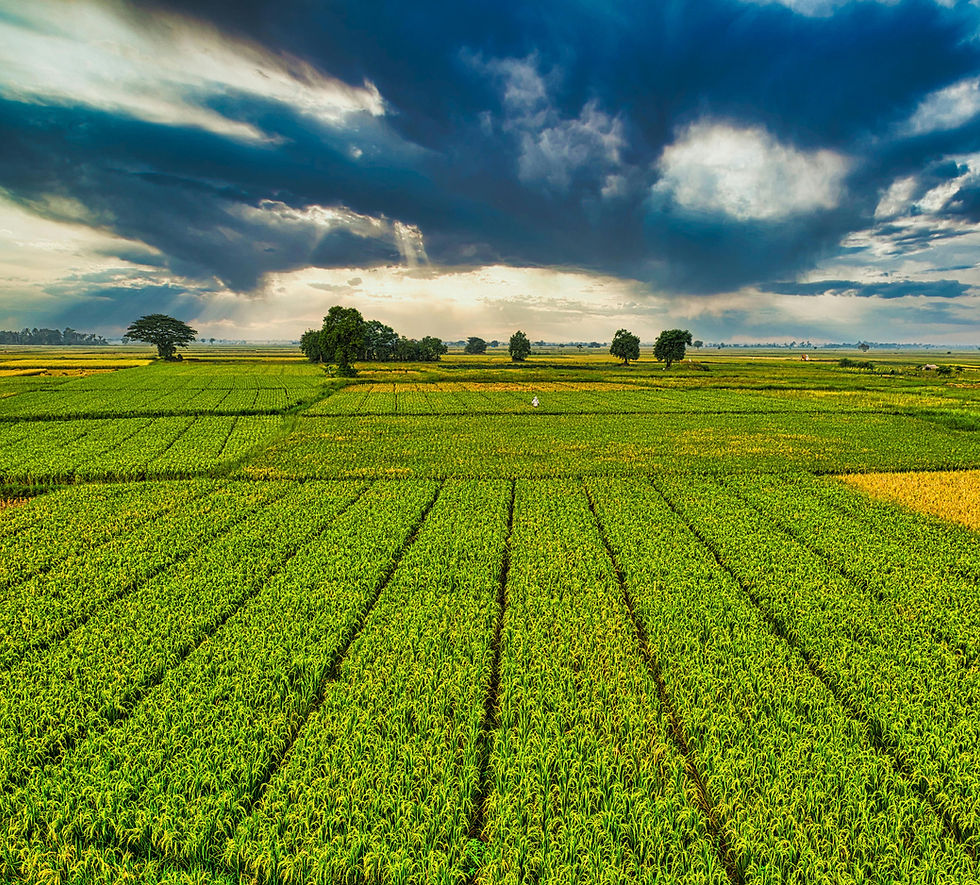
In agriculture, no two farms are truly alike. Soil quality varies from one plot to another, water availability shifts from season to season, and climate stressors affect each farmer differently. For decades, agricultural recommendations were issued as “blanket advisories” based broadly on soil types and agro-climatic zones. While these guidelines provided a useful starting point, they often treated all farmers within a zone as the same, ignoring the micro-variations in soils, water availability, and farm-level realities that truly shape productivity.
Why Personalisation Matters in Agriculture
Traditional #advisory systems often fail because they assume uniformity where none exists. A farmer growing paddy in a delta region faces entirely different realities than another cultivating pulses in #semiarid drylands. Even within a single district, two farmers may have different soils, irrigation access, and pest challenges. Yet, blanket advisories rarely capture this complexity. The result? Many farmers apply inputs inefficiently, face higher risks from climate shocks, and often fail to capture the full value of their efforts.
With unpredictable rainfall, rising temperatures, and new pest outbreaks, farmers cannot afford “one-size-fits-all” guidance. Personalised #PackageofPractices shifts the narrative from “general guidelines” to “what works best for my farm, in my context.” This is not just about improving yields — it is about building resilience, cutting costs, conserving resources, and ensuring profitability amidst climate volatility.
Personalisation is no longer a luxury — it is the foundation of resilience and profitability. Personalised PoPs help #farmers adapt quickly:
Switching to climate-resilient varieties suited to their microzone.
Using precision irrigation schedules to save water in drought-prone areas.
Getting early warnings of pest or disease infections.
Adjusting harvest and storage decisions to avoid weather-related losses.
This is not just adaptation — it is about thriving under uncertainty.
The Power of #Geospatial Technology and #AI as the Engine of Personalisation
Geospatial technologies such as remote sensing, satellite imagery, and GIS mapping provide a bird’s-eye view of farming landscapes. They allow for:
Field-level insights on soil fertility, moisture, and crop health.
Climate risk mapping to forecast droughts, floods, or heat stress hotspots.
Pest and disease surveillance with early detection through vegetation indices.
With this, advisory systems can pinpoint what works for each farm instead of recommending generic practices.
#Artificial Intelligence (AI) integrates diverse data — weather, soil tests, market trends, crop models, and farmer history — into actionable insights. AI-powered decision support systems can now:
Suggest optimal sowing windows based on local weather predictions.
Recommend input doses (fertilisers, pesticides, water) tailored to soil health and crop stage.
Forecast market price trends to guide cropping choices.
Provide adaptive practices that change in real-time when the weather deviates from forecasts.
Essentially, AI transforms raw data into farm-specific blueprints for resilience and profitability.
From Advice to Action: Building #Farmer-Centric Systems
The true power of personalised PoPs lies in delivery and adoption. For this, we need:
#Farmer-ProducerOrganizations (#FPOs) as last-mile delivery hubs of tailored advisories.
#Digitalplatforms and #mobileapps that provide simple, actionable guidance in local languages.
Incentives and credit linkages tied to the adoption of sustainable, climate-smart practices.
Capacity building so farmers see technology as a partner, not a burden.
When technology is farmer-centric, it creates empowerment, not dependency.
The Road Ahead
The #convergence of AI, #geospatial intelligence, and #climate science is ushering in an era where each farmer can cultivate not just crops, but confidence. Personalised packages of practices represent a quiet revolution: farmers are no longer passive recipients of advice but active managers of tailored knowledge systems.
In the new age of #agriculture, data is the seed, AI is the plough, and personalisation is the harvest. By aligning technology with farmer realities, we can ensure that agriculture is not just climate-resilient but also profitable, inclusive, and sustainable.


Comments